
By Patrick Wisdom
Carnival Calabar did not become Africa’s biggest street party by accident. Over the years, it has grown into a cultural movement, a tourism powerhouse, and a city-wide celebration that transforms Calabar, the capital of Cross River State, into one massive open-air festival. While many people believe the carnival’s greatness lies only in the number of dancers and revellers, its true strength goes far beyond that. What sets Carnival Calabar apart is how the entire city shuts down to celebrate, with streets, neighbourhoods, restaurants, clubs, and public spaces all becoming part of one continuous party.
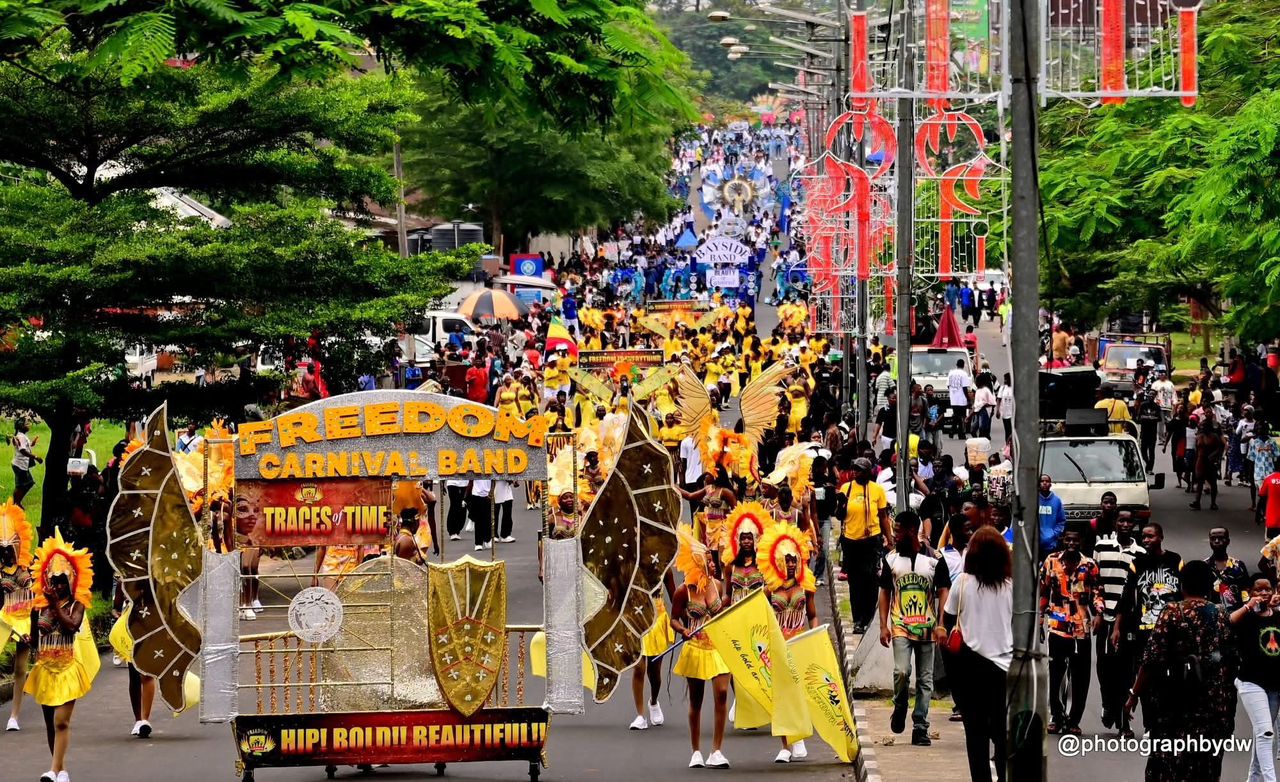
As I walked from Mary Slessor roundabout to High Quality on marian road, I was surprised at what I saw behind the carnival route, unlike many carnivals that are confined to a single route or venue, this Calabar spreads across the city. Streets are closed, tables are set outside, music blares from every corner, and residents turn their streets into viewing zones and celebration spots. Restaurants and clubs spill onto the roads, while families, tourists, and party-goers gather to eat, dance, drink, and cheer as the carnival procession passes. This city-wide participation is what truly earns Calabar its reputation as Africa’s biggest street party, THE CARNIVAL DOES NOT JUST HAPPEN IN CALABAR, CALABAR BECOMES THE CARNIVAL.
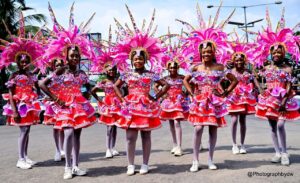
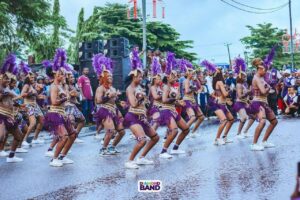
At the heart of the festival is a spectacular display of culture, music, dance, and storytelling that reflects the rich heritage of Cross River State and Nigeria as a whole. For nearly eight hours, thousands of revellers defy the scorching December sun to celebrate creativity and identity. From elaborate costumes to energetic dance routines and live music, the streets come alive with colour and rhythm, drawing visitors from across Nigeria and around the world.
The carnival route itself is a moving theatre of excitement. From Millennium Park through Eleven Eleven Junction via Calabar Road, down to De Choice Foods Junction, and along Mary Slessor Avenue to the roundabout where the first adjudication takes place, the crowd grows thicker and louder. The procession then continues to UJ Esuene Stadium for the final lap. Along the entire route, fun-seekers form human fences, lining the roads to cheer participating bands and admire the motorised floats as they perform right on the streets, turning the city into one long stage.
Over the years, Carnival Calabar has also built a strong reputation for world-class entertainment. Major Nigerian artists such as Wizkid, Tiwa Savage, Burna Boy, Olamide, Mr. Eazi, Runtown, Iyanya, Timaya, Tekno, and 2Baba (Tuface Idibia) have graced the festival. International stars including Lucky Dube, Akon, Fat Joe, Young Jeezy, Nelly, Kirk Franklin, and Sean Kingston have also performed, further boosting the carnival’s global appeal and positioning it as a serious entertainment and tourism brand.
The numbers behind the carnival tell an even stronger story. In 2024 alone report shows that, the festival attracted an estimated 150,000 visitors in December, representing a 42 percent increase compared to the 62,512 visitors recorded in 2023. About 89 percent of visitors arrived by road, 7 percent by air, and 4 percent via sea routes. Visitors spent an estimated ₦8.875 billion on transportation to Calabar, a sharp rise from ₦3.1 billion recorded the previous year, highlighting the carnival’s growing economic impact.
Air travel figures further reflect the tourism boom. Calabar International Airport recorded over 10,000 inbound passengers between November 1 and December 29, 2024, a 34 percent increase from the 7,452 passengers recorded in 2023. Of these arrivals, 79 percent came from other Nigerian states, while 3 percent were diaspora visitors who travelled mainly for leisure and the carnival. Visitors came from Akwa Ibom, Lagos, Port Harcourt, Abia, the FCT, Enugu, as well as international destinations such as Cameroon, the United Kingdom, Canada, and Equatorial Guinea.
The hospitality sector also felt the full impact of the carnival. Hotel occupancy rates rose to 68 percent in 2024, up from 57 percent in 2023. More than 90 percent of hotels in Calabar recorded 100 percent occupancy between December 15 and 29. Revenue from hotel bookings alone reached an estimated ₦2.79 billion, with an average of 25,000 nightly bookings in December across roughly 3,600 available bed spaces. Food and breakfast services generated an additional ₦900 million in revenue, showing how the carnival drives spending across multiple sectors.
By 2025, Carnival Calabar’s growing international recognition was further confirmed when Portugal’s Ambassador to Nigeria, Paulo Martins Santos, attended the festival. Experiencing the carnival for the first time, the ambassador praised its quality, organization, and cultural depth. He noted that even the children’s festival, which he initially expected to be a simple parade, demonstrated strong planning, symbolism, and cultural intent. According to him, the children’s event set the tone for the larger spectacles that followed, including the bikers’ parade and the main carnival procession.
Today, Carnival Calabar stands as more than a festival. It is a cultural statement, an economic engine, and a living example of how tourism, entertainment, and community participation can transform a city. Carnival Calabar has not only earned its title as Africa’s biggest street party, it continues to redefine what that title truly means which is why no other state can replicate.


