
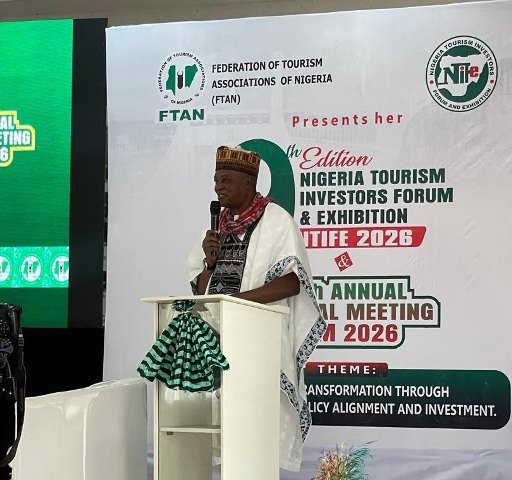
Nigeria’s foremost tourism expert, Ambassador Ikechi Uko, has identified Enugu State as a leading example of how strategic investments in aviation, infrastructure, hospitality and tourism can be leveraged to stimulate economic growth, attract private-sector investment and transform a regional economy.
Uko made this known during his presentation titled “Tourism and Economic Growth: State Policy, Infrastructure and Destination Development” at the FTAN Annual General Meeting and NTIFE 2026 in Abuja. Uko said tourism delivers its greatest economic impact when it is supported by deliberate government policies and sustained investments in enabling infrastructure rather than relying solely on the promotion of tourist attractions.
According to him, Enugu’s development strategy demonstrates how transportation, destination development, hospitality and investment promotion can be integrated into a single economic growth agenda. Uko explained that the state has strengthened its aviation sector through improvements to Akanu Ibiam International Airport and the establishment of Enugu Air, while adopting a commercial model that allows private operators to manage day-to-day airline operations. He noted that this approach enhances operational efficiency, improves connectivity and provides the government with sustainable revenue.
He observed that improved air connectivity has increased investor confidence and positioned Enugu as a more attractive destination for both business and leisure travellers. The tourism expert also commended the Enugu State Government for rehabilitating abandoned government-owned hotels and concessioning them to private investors, describing the initiative as an effective public-private partnership that has revived dormant assets, created jobs and improved service delivery within the hospitality sector. Uko revealed that he had previously been invited by the state government to assess Enugu’s tourism potential and develop recommendations for destination development. He said several of those recommendations have since been implemented, resulting in improvements in tourism infrastructure, destination marketing and investment promotion.
He stressed that tourism cannot thrive in isolation, arguing that successful destinations require coordinated investment in aviation, road infrastructure, security, accommodation and destination marketing. According to Uko, Enugu’s approach demonstrates that governments should view tourism not merely as an entertainment sector but as an economic driver capable of attracting investment, generating employment and increasing internally generated revenue when supported by the right infrastructure. He urged other Nigerian states to adopt similar integrated development models that combine aviation, infrastructure and tourism to diversify their economies and improve competitiveness.
Uko’s remarks come as the Enugu State Government continues to pursue an ambitious economic transformation agenda anchored on aviation, tourism, hospitality and private-sector investment. The administration has projected that these initiatives will help grow the state’s economy from US$4.4 billion to US$30 billion by 2031, with aviation and tourism playing central roles in achieving that target. He concluded that Enugu’s experience offers a practical blueprint for states seeking to unlock the economic potential of tourism, demonstrating that sustained investment in transport infrastructure, hospitality and destination development can create long-term value for both residents and investors.


