
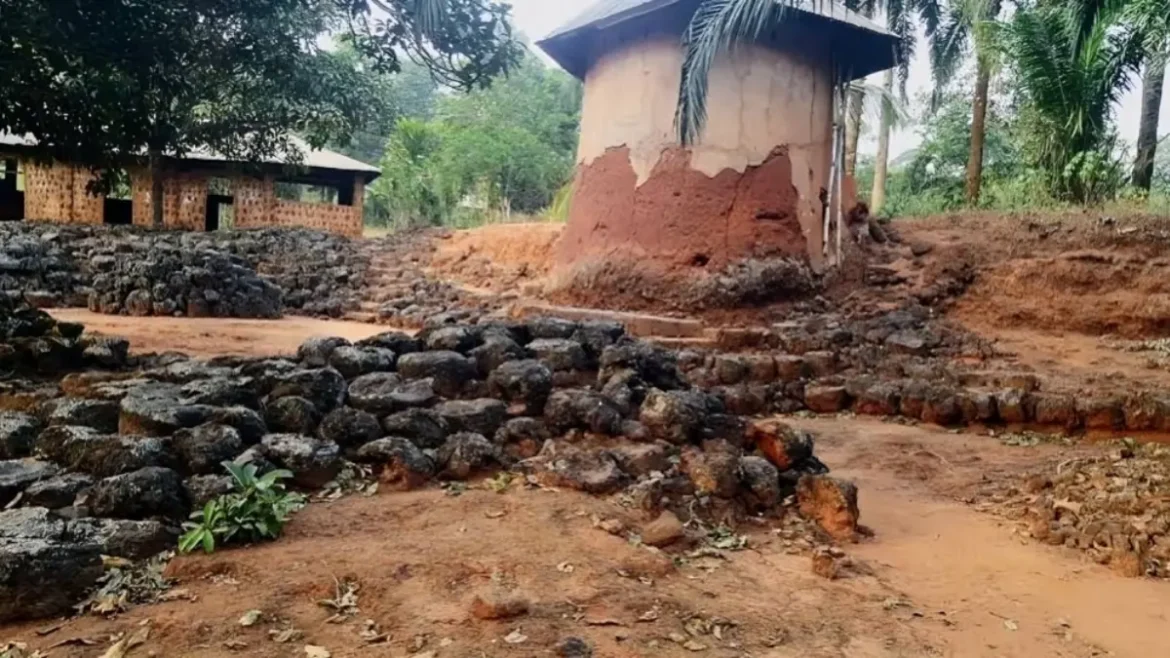
The United States Government has awarded a $125,000 grant to support the conservation and preservation of the historic Lejja iron-smelting site in Enugu State.
The funding was provided through the US Ambassador’s Fund for Cultural Preservation and will be implemented by the Centre for Memories, Enugu, through its Nchekwaba project.
The initiative will combine archaeological conservation with three-dimensional digital documentation, physical preservation of the site and the recording of endangered oral histories connected to the community.
The project was formally launched on Thursday at the National Museum in Onikan, Lagos, with representatives of the United States, Enugu State Government, Federal Government and several international and Nigerian cultural heritage institutions in attendance.
The US Consul General, Brandon Hudspeth, described the initiative as an example of the continuing cultural partnership between Nigeria and the United States.
He said partnerships between institutions in both countries could transform cultural exchange into practical efforts aimed at protecting important heritage sites for future generations.
Representing Enugu State Governor Peter Mbah, Deputy Governor Ifeanyi Ossai welcomed the grant and said the state was committed to supporting the preservation effort.
Ossai disclosed that the state government was preparing an executive bill that would be presented to the Enugu State House of Assembly to establish a legal framework for protecting and managing the site.
He also stressed the importance of involving the people of Lejja directly in the preservation process, noting that community participation would be crucial to the long-term success of the project.
The Project Lead and Executive Director of the Centre for Memories, Iheanyi Igboko, explained that the initiative was the result of decades of archaeological research and community efforts surrounding Lejja.
He stressed that the Centre for Memories did not discover the site but was joining researchers, traditional custodians and community members who had been studying and protecting it for years.
Lejja is historically associated with iron production, with archaeological remains including furnaces, iron ore, tuyere and large quantities of slag found across the community.
Research has indicated that iron smelting occurred at Lejja for more than 2,000 years, making the site important for understanding the development of iron technology in southeastern Nigeria.
Igboko also explained that iron was not merely an economic activity in Lejja but had connections with the community’s spirituality, traditional institutions, identity and cultural practices.
The Nchekwaba project will focus on five major areas: preserving important features of the site, digitally documenting its archaeological landscape, recording endangered oral traditions, strengthening community capacity and creating digital platforms through which people unable to visit Lejja can experience its history.
The project will involve archaeologists, conservators, the Lejja community and several heritage institutions, including the National Commission for Museums and Monuments, University of Nigeria, Nsukka, Smithsonian Institution and other organisations.
The Centre for Memories also hopes that the preservation programme will help pave the way for Lejja to receive formal national heritage status and eventually be considered for UNESCO recognition.
The Minister of Art, Culture, Tourism and Creative Economy, Hannatu Musawa, who was represented at the event, described the project as an important step towards preserving Nigeria’s historical and technological heritage.
She said Lejja demonstrated Nigeria’s long history of technological innovation and pledged the ministry’s support for efforts aimed at preserving cultural heritage while using culture and tourism to promote education and economic development.
Igboko said his relationship with US cultural programmes had helped build his capacity to develop the preservation initiative.
He explained that participation in the Young African Leaders Initiative and the Cultural Heritage Forward programme contributed to his understanding of modern heritage preservation practices.
The project ultimately aims to ensure that Lejja is not simply treated as an archaeological site for academic study but is protected as part of Nigeria’s shared cultural heritage and humanity’s broader historical legacy.


